
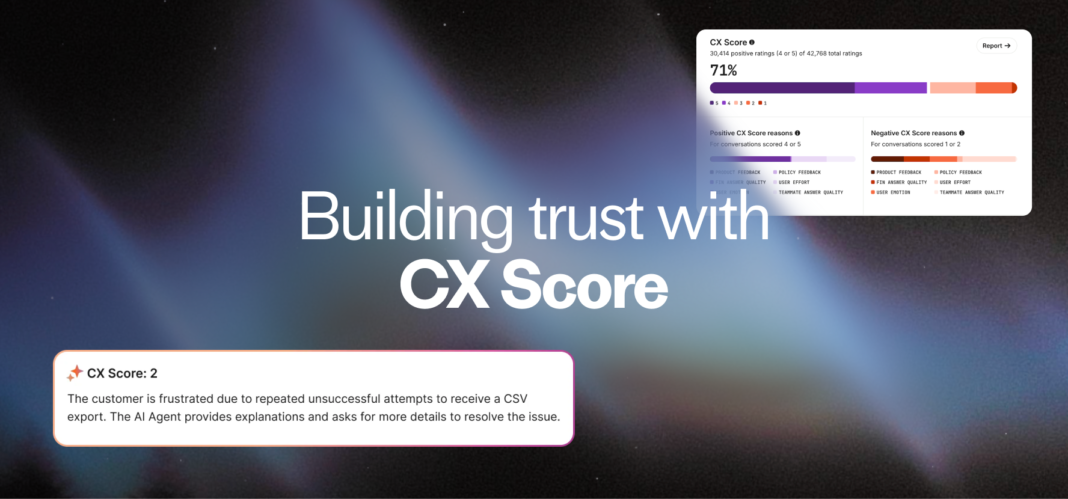
“You don’t have to trust the algorithm; you can see exactly why a conversation earned the score it did.”
We recently shared how we redesigned CX Score to deliver deeper, more actionable insights across every conversation. The most common follow-up from support leaders was simpler and incredibly important: “Can I trust it?”
It’s the right question.
CS teams are the subject matter experts on customer experience. They understand the nuance of what customers feel, the context behind every interaction, the difference between a technically resolved issue and a genuinely satisfied customer. Until now, there hasn’t been a metric that could reliably match that expertise at scale.
We built CX Score to give support teams a complete view of how their customers feel across every conversation. It surfaces what’s working, what’s not, and why—so leaders can communicate impact clearly and drive change across support, product, and the wider business.
Five steps to building a trustworthy metric
We treated trust as a design constraint from day one—starting with how support professionals actually evaluate conversations, validating every decision against human judgment, and creating a system transparent enough to inspect and defend.
1. It’s grounded in how support teams define quality
We started with how experienced support professionals actually evaluate conversations—collecting real examples of strong, mixed, and poor interactions across industries, identifying the specific factors that shape overall experience, and writing plain-English rules for each.
The result: CX Score applies the same criteria a trained support professional would use, not generic LLM assumptions.

2. It’s aligned with human judgment
We created a dataset of thousands of real customer conversations spanning multiple industries, languages, channels, and agent types. Each was manually reviewed by experienced support professionals—with two reviewers per conversation where possible and disagreement resolution to create stable consensus labels.
The result: CX Score is trained and tested to behave like an expert reviewer, not a language model making broad guesses.
3. It’s engineered by AI specialists
CX Score isn’t a prompt attached to an LLM. It’s a production system built by a team in Intercom’s AI Group.
The system includes specialized handling for long transcripts, model configuration tailored for support language and subtle sentiment, prompt engineering designed to default to neutral when evidence is weak, and a multi-stage evaluation pipeline that checks for precision, consistency, and reliability.
The result: A metric built by a team that understands LLM behavior in production support environments, where accuracy and consistency matter most.
4. It’s validated statistically and qualitatively
Trust requires measurement, not vibes.
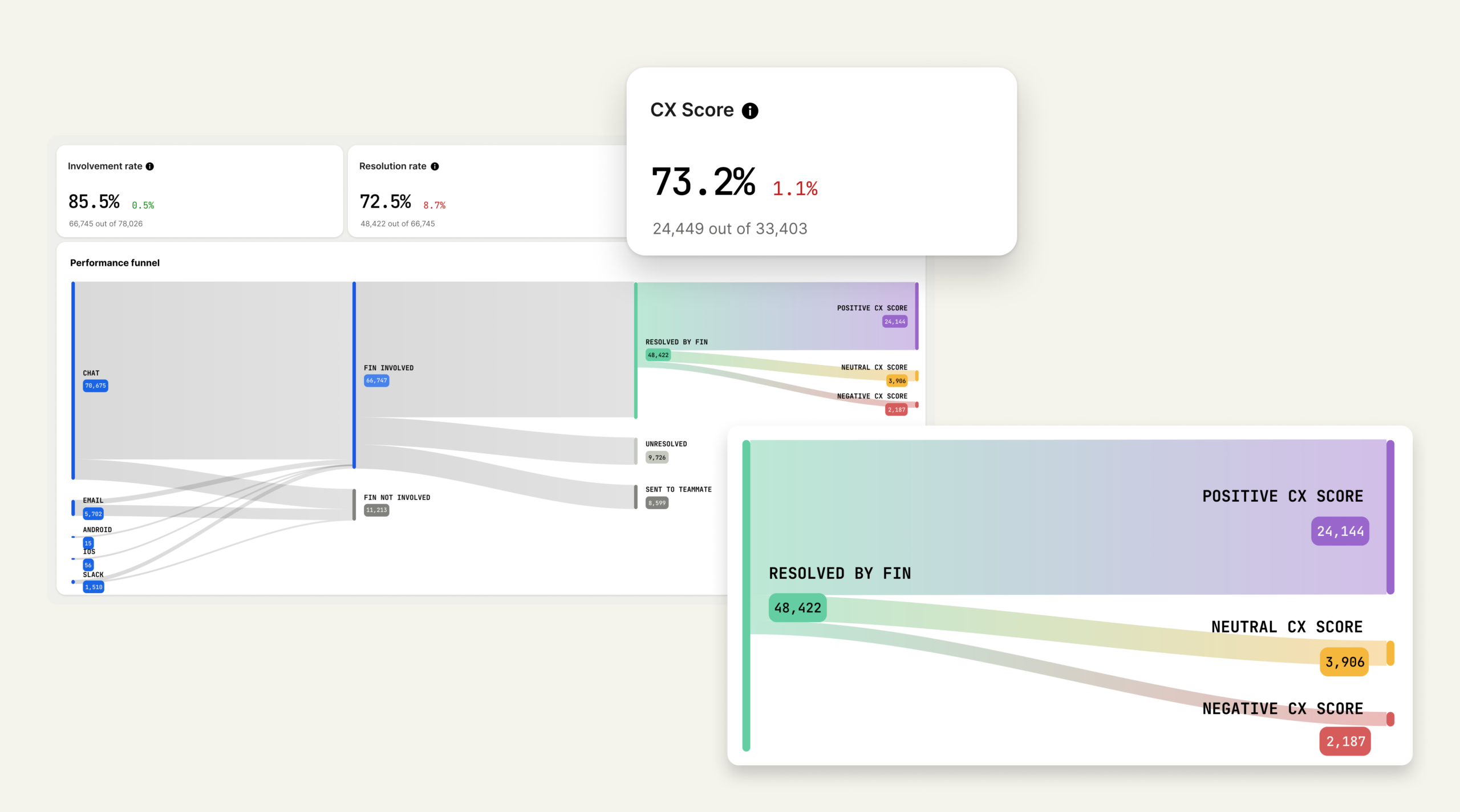
We tested CX Score across standard ML metrics: Precision (when the model flags a negative experience, how often do humans agree?), recall (how many human-identified issues does it catch?), and F1 score (the balance between both).
We set an explicit bar: F1 above 0.8, representing high agreement with human judgment. We reran these evaluations through every revision, checking for regressions or biases. And we focused especially on negative experiences, because a false negative hides a real problem.
The result: CX Score meets a measurable standard before it ships—not a gut check, a statistical requirement.
5. It was battle-tested with real customers
Lab accuracy isn’t enough. Customer environments are messy: Varied ticket types, mixed languages, unpredictable edge cases.
Before release, we ran a multi-phase field test—shadow-scoring conversations with both old and new models, validating sensible behavior across agent type and conversation length, then rolling out to a controlled customer group who confirmed the scores felt right, reasons were clear, and insights were actionable.
The result: CX Score shipped because real teams told us it made sense in practice, not because it passed internal tests.
The importance of explainability
One of the most critical choices we made was ensuring CX Score isn’t a black box.
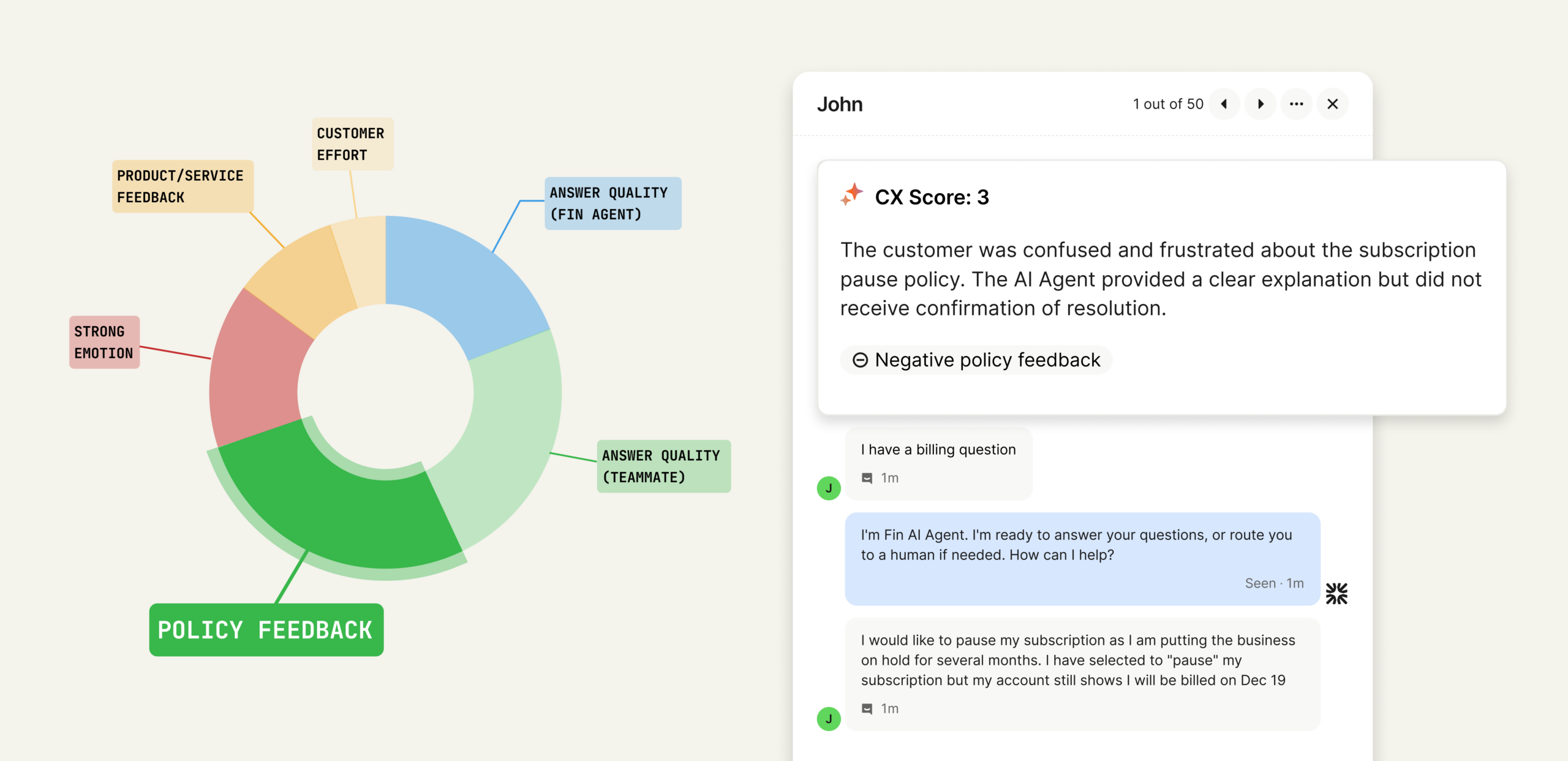
Every score comes with clear reasons, concrete excerpts, and a short explanation of what influenced the rating. This turns the metric into something you can inspect, audit, and explain to executives.
You don’t have to trust the algorithm. You can see exactly why a conversation earned the score it did.
The takeaway
In a world where products look the same and AI can generate any interaction, customer experience is one of the few differentiators that actually matters. Support leaders have built that expertise conversation by conversation.
What they’ve lacked is a measurement system that could validate it at scale—one that’s reliable enough to report to the C-suite, explainable enough to defend in strategy meetings, and rigorous enough to drive real decisions.
That’s what CX Score is designed to be: A metric that reflects the reality support leaders see every day, backed by the technical rigor to make it credible everywhere else.
Want to see CX Score in your workspace? Get started →
This is the second post in our CX Score series. Missed the first one? Read how CX Score evolved to provide deeper, more actionable insights →